
There’s decent money to be made promoting Hoka’s affiliate program, especially when commissions reach up to 14% on shoes that regularly sell upwards of $150.
That’s because it isn’t just another running brand.
Founded in 2009 by Nicolas Mermoud and Jean-Luc Diard (both former Salomon designers), it grew out of an ultra-endurance race on Mount Etna where they described the downhill sections as feeling like they were “flying down the mountain.”
Instead of chasing minimalist trends like everyone else at the time, they doubled down on maximum cushioning.
Luckily, that gamble paid off.
You’ll see Hoka everywhere from race start lines to everyday walking, gym sessions, and recovery days – which is exactly why the affiliate angle works way beyond the running crowd.
Affiliate-wise, you can actually promote Hoka through numerous established networks.
Rakuten Advertising handles most US traffic with rates ranging from 3–14%, while Commission Factory covers Australia, FlexOffers supports multiple regions at lower rates, and Awin manages Europe and the UK.
The referral program gives you a 30-day cookie, cross-device tracking, and pays out on Net 60 once you hit the $50 minimum, via PayPal, direct deposit, or paper check depending on the network.
Hoka’s rise alone shows you there’s good cash in promoting shoes that look like marshmallows but perform like rockets.
Admittedly, the chunky aesthetic still makes me chuckle whenever I see them out in the wild.
Hoka Affiliate Program Breakdown
Understanding how Hoka’s partnership program works helps you pick the best network and also avoid leaving money on the table.
Here’s the short version before we dive in:
Key Program Details at a Glance
| 📊 Program Feature | 📋 What You Get |
|---|---|
| 🔗 Program URL | Join Hoka Program |
| 💰 Commission Rate | Up to 14% (3-14% depending on network) |
| 🍪 Cookie Duration | 30 days |
| 🛒 Average Order Value | $150–$175 range |
| 🧩 Products | Running shoes, trail footwear, hiking models, activewear |
| ⏱️ Application Approval | 5–10 business days (varies by network) |
| 🔍 Traffic Requirement | No stated minimum; quality fitness/lifestyle content preferred |
| 🎯 Promo Materials | Banners, product links, creatives via network dashboard |
| 📱 Network Platform | Rakuten Advertising (primary), Awin, Commission Factory, FlexOffers |
| 💸 Payment Methods | PayPal, direct deposit, paper check |
| 💲 Payment Schedule | Net 60 with $50 minimum threshold |
| 🌎 Markets | US (Rakuten), Europe/UK (Awin), Australia (Commission Factory) |
Commission Rates by Network
The rates vary depending on which affiliate network you go with.
Rakuten Advertising is usually the best option if you’re serious about US-based sales.
Commission Factory handles Australia, with one cut on full-price items and a smaller share on sale stock.
FlexOffers falls behind at the low end unfortunately.
And as for Awin, it manages the UK side, but you’ll need approval before seeing their numbers.
From my experience promoting seasonal products like adults Halloween costumes in the past, choosing the right platform makes a real difference long-term.
Especially when average orders are in the $150–$175 range because that small percentage gap can add up pretty fast.
Use the calculator below to estimate Hoka affiliate earnings from your monthly orders, average order value, and your chosen network’s commission rate. 👇
Tracking & Attribution Rules
Every time someone clicks your unique referral link, a one-month tracking window starts.
So if they circle back to Hoka’s site three weeks later and buy a pair of Clifton 9s, you’re still getting paid.
Better yet, attribution works across devices. Mobile click, desktop checkout? No problem, you still get credited.
Rakuten’s dashboard updates in near-real-time, which I appreciate after dealing with programs where conversions vanish faster than my motivation on Monday mornings.
Payment Schedule & Methods
The good news is you’re not stuck with one route, as each partner network handles its own approvals and payments.
Most pay on a roughly two-month cycle with a minimum to hit, via PayPal, direct deposit, or even paper checks if you’re old-school like me!
The wait isn’t ideal, but I’d rather deal with a delay than mess with networks that pay quicker but track like a leaky bucket.
Joining the Hoka Program
Getting approved for Hoka’s program is pretty painless once you know which network fits your region.
1: Pick the Right Affiliate Network
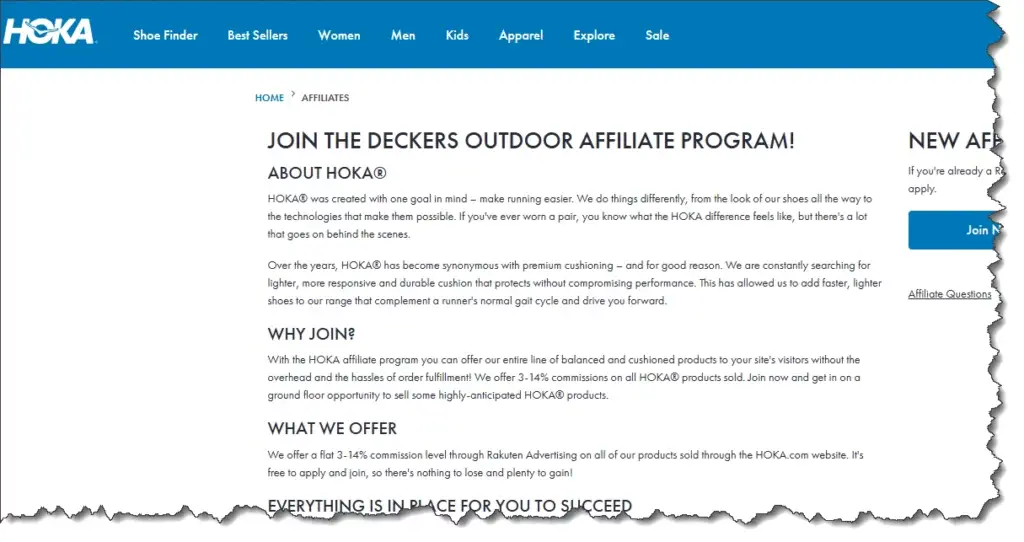
Rakuten Advertising is usually the best pick if your audience is in the US because they offer the highest percentages and decent support for affiliates.
Awin is the go-to for Europe (mostly the UK). However, their details stay hidden until your application is accepted.
Commission Factory handles the Australian side. It’s simple to join and geared toward local payments.
FlexOffers covers multiple regions, but their Hoka offer doesn’t exactly stand out.
Choose the network based on where your readers are and what share you’re aiming for. There’s no point chasing something that doesn’t serve your market.
2: Submit Your Application
Use the “Apply” button in the Key Program Details table above, it takes you straight to the right place.
Rakuten asks for your website and traffic stats.
Awin wants to know how you promote and who your audience is.
Commission Factory keeps it short and sweet for Aussie creators.
FlexOffers has different entries for each region. Be sure you’re choosing the one that matches your market.
All of them want a quick rundown of your traffic, content, and plans for promoting running gear. Just don’t fake it because they’ve seen every trick in the book.
3: Access Your Partner Dashboard
Now you wait around 5 to 10 business, which is the norm. Rakuten tends to take their time reviewing, so don’t panic if you don’t hear back instantly.
Once you’re in, you’ll get dashboard access where you’ll get links, browse available brands, and track your earnings.
Poke around a bit and get comfortable before applying directly to Hoka’s opportunity, as it’ll save you time later on.
4: Apply Directly to Hoka
Look for “Hoka” or “Deckers Outdoor” inside the advertiser directory and scan through the terms.
Check the percentages, restrictions, and what they expect from partners.
When applying, give a quick but clear breakdown of who follows you and why they might want these shoes.
No fluff, just real fitness or lifestyle content with a real audience will get you accepted.
Big wins with the Hoka partner program usually come down to proving you’re not a 1990s spam cannon hiding behind a keyboard.
5: Build and Use Your Referral Links
Once approved, download the creatives and set up your direct product URLs.
Skip the homepage and send people straight to the Clifton 9s or whatever they’re eyeing up, since that kind of targeting performs way better.
Always test before sending traffic to your links. No one wants to miss a sale credit because tracking glitched, right?
Then stay organized by watching what’s bringing in sales, and cut anything that’s just sitting there collecting dust.
Who Should Promote Hoka
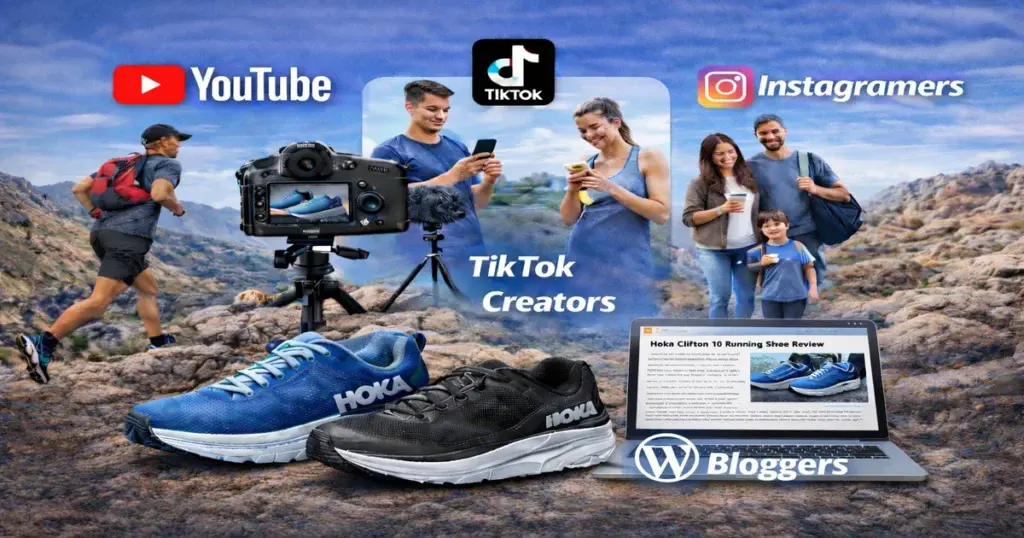
This opportunity hits hardest when you connect comfort-focused products with people actively searching for them within your content.
Running Bloggers and YouTube Gear Reviewers
If you cover serious running content, you’ve already got a leg up.
Men’s and women’s daily trainers like the Clifton 10 slide perfectly into weekly mileage and training-plan content, while max-cushion shoes such as the Bondi 9 appeal to runners who care more about protecting their legs than shaving seconds.
On the trail side, models like the Speedgoat 6 and Tecton X 3 give you natural angles around grip, terrain, and fatigue, especially for longer runs.
Your training breakdowns and gear comparisons pair naturally with this footwear because runners don’t just ask “Is it good?”, they ask “Is it right for me?”
Head-to-heads like Clifton 10 vs Bondi 9 vs Speedgoat 6 work because they mirror the exact decision process runners are already in.
Add a proper 100–200-mile follow-up showing outsole wear and midsole fatigue, and you move from surface-level review to genuine buyer confidence.
Relevant niches include:
- Marathon/half-marathon training focused on long-run durability
- First-time runners buying their first serious pair of running shoes
- Heavier runners needing extra cushioning and impact protection
- Treadmill runners dealing with leg fatigue and joint stress
- Trail runners weighing grip and protection against shoe weight
Because these shoes come in both adult male and female versions, one quality blog post or video can serve multiple audiences without extra legwork.
TikTok Fitness Creators
Short-form works great with the thick, marshmallow-like look.
Shoes such as the Bondi 9 immediately grab attention on camera, while the Clifton 10 feels familiar enough that viewers trust it.
Recovery-focused picks like the ORA Recovery Slide 3 slot easily into post-gym, end-of-day, or rest-day clips.
Even kids’ shoes can appear naturally when parents film active days with boys and girls at the park or on weekend walks.
Those chunky soles stand out visually and get people curious about the comfort angle.
Your quick workouts, running tips, and “day in my life” clips blend well with the lifestyle crossover, especially when the shoe is framed around surviving long days on your feet rather than performance stats.
Real-world niches this works in:
- Beginner fitness journeys (zero-to-5k, couch-to-consistent walking/running)
- On-your-feet jobs with long shifts (retail, hospitality, healthcare)
- Everyday training that doubles as daily wear (gym, errands, home)
- Post-workout recovery and next-day soreness management
- Active families with kids in sports, PE, and outdoor play
Here, the great mix of men’s, women’s, boys’, and girls’ footwear makes the content feel real instead of staged.
Instagram Lifestyle Influencers
Fashion-focused creators can ride the celebrity adoption wave, but everyday wear is where this really opens up.
Folks wear Hoka to grab coffee, walk the dog, or rack up steps around town, not just to cross finish lines for a medal.
Lifestyle-friendly models like the Transport GORE-TEX or Anacapa 2 Low GORE-TEX work pretty well for both men and women because they still look acceptable with casual outfits while giving all-day comfort.
Parents can naturally show kids wearing models like the Transport Freedom during errands or travel days.
Showing how they fit into casual posts, walking errands, or chilled outfits keeps things natural because people can see how they’re worn in every-day life.
Good niche fits include:
- Urban walking fitness (8k–15k steps per day)
- Weight-loss walking programs for beginners
- All-day walking shoes for women 35+
- Comfort footwear for dog walkers
- Parents clocking high step counts (school runs + errands)
Hoka sells well here because it looks wearable and feels good, not because it’s “technical”.
(If your content focuses more on laid-back style and everyday wear, then Hey Dude’s program is another well-heeled fit).
Health and Wellness Bloggers
If you’re covering injury prevention or active aging, Hoka’s cushioning actually does half the work for you.
Max-cushion options like the Bondi 9 appeal to older men and women dealing with sore knees or tired feet, while lighter daily trainers such as the Clifton 10 work well for walking programmes and gentle cardio.
Parents can also tie this into comfort-first picks for boys and girls who are constantly active.
This comfort-first pitch appeals to readers who care more about feeling good tomorrow than chasing finish-line records.
Just keep your blog content language grounded like “less fatigue”, “easier movement”, “better daily comfort”, as it builds trust across ages.
Well-suited niches are:
- Walking-for-weight-loss plans built around daily consistency
- Active-aging fitness focused on staying mobile and pain-free
- Low-impact cardio routines that protect joints and knees
- Getting back into exercise after time off or injury
- Family wellness content centred on movement and mobility
When you talk about comfort across different life stages, your audience can widen quickly.
Active Industry Business Bloggers
Fitness entrepreneurs, outdoor guides, and health-focused creators can mix Hoka into bigger lifestyle pieces without it being forced.
Work-friendly options like the Bondi SR make sense for long shifts, while weather-ready shoes such as the Transport GORE-TEX or Anacapa 2 Low GORE-TEX suit outdoor instructors and guides.
Even parents in these industries can also naturally reference kids’ models during family activities without derailing the content.
You may find Hoka performs better when mentioned in lifestyle or workday content because that’s how the shoes are actually used.
This works well in niches like:
- Personal trainers and coaches working long, back-to-back sessions
- Outdoor guides and instructors spending full days on varied terrain
- Shift workers in hospitality with long hours on hard floors
- Jobs that require standing or walking all day without real breaks
- Business owners balancing active workdays with daily training
When men, women, and kids all appear using the shoes naturally, your recommendations feel earned, not pushed.
Pros and Cons of the Program
It’s time for some honesty about what you’re getting into like the perks and stuff that drags as a Hoka affiliate partner:
Brand Growth That’s Hard to Ignore
Hoka’s been on the rise year-over-year, now at multi-billion revenue, and holding a noticeable share of the running shoe market.
That’s a long way from the startup days, and that kind of momentum gives your content real credibility.
They’ve also broken into lifestyle markets, which gives you more angles to feature their gear.
Higher Payouts from Premium Pricing
With average shoe prices around $150–$175, even the lower cut gives you $7.50–$8.75 per sale. Top band can hit $20+.
I’ve pushed everything from artificial Christmas trees to online courses, so in my experience, high-ticket items make each percent go further.
Plenty of customers buy multiple pairs too, which means more orders over time.
You’re Not Locked Into One Platform
Having a few different partner networks gives you flexibility if one starts glitching or pays late.
Test which one works best for your crowd and pivot if needed.
That beats the headache of being stuck in one lane that underdelivers or geo-blocks your core readers.
Repeat Buyers (30-Day Window)
Hoka fans get hooked on the comfort and tend to stick around.
Folks who buy one pair usually come back, so you’re not chasing new clicks for every sale if they return to make another purchase within the thirty-day window.
That underfoot feel basically writes your pitch for you.
This repeat-purchase behaviour is also why the Neiman Marcus program holds up: when luxury habits meet a taste for spending, the referral cut is dressed to impress.
Region-Based Rate Gaps
Rakuten’s highest percentages are reserved for US traffic.
Over in Europe, Awin eats 3.5% off the top with their tracking fees, which hurts your cut.
Commission Factory covers Australia, but you’re not striking gold there either.
So where your audience lives plays a big role in how well Hoka’s partner program pays off.
Crowded Space, Higher Bar
There’s a lot more noise around Hoka now : more creators, more competition, and a higher bar to break through.
You can still win, but generic product blurbs won’t cut it. Your content has to be sharper than ever.
I’ve seen this before with seasonal niches. Whenever a product becomes popular, everybody rushes in, and lazy content also sinks.
Short Buying Window
The window isn’t long when people spend weeks comparing shoes and reading reviews.
Some buyers simply take their time, especially on premium products.
Thankfully, Hoka’s strong brand usually shortens that cycle, and cross-device attribution still helps catch mobile-first browsers who buy later on desktop.
Is the Hoka Partner Program Worth it?
If your traffic’s mostly US-based and you cover running, fitness, or lifestyle gear, then yep — Hoka’s affiliate partnership is worth your time.
The upside is there, the numbers add up quickly, and this isn’t a fly-by-night brand either. Hoka’s momentum and die-hard fans give it real staying power.
The downsides are that Europe can see margins shaved by network fees, and the space is more crowded than it used to be.
But if your content cuts through the noise and your audience buys this kind of shoe, the math still works.
My final take: pick the network that fits your region, stay consistent, and lead with comfort because that’s where Hoka outruns the pack.
FAQs About Hoka’s Affiliate Program
What commission rates does Hoka offer?
Between 3–14% depending on the network, with Rakuten offering the highest rates.
Does Hoka have an affiliate calculator?
Yes. I built one in this review. See Commission Rates by Network to test sales, order values, and payout rates.
How do I join the Hoka affiliate program?
Apply through Rakuten, Awin, Commission Factory, or FlexOffers. Approval usually takes 3–7 days.
What is the cookie duration?
30-day tracking with cross-device support. Clicks on mobile still count if the order’s later on desktop.
When are payouts made?
Net 60 once you hit $50. Affiliates can choose PayPal, direct deposit, or check, depending on the network.
What products can affiliates promote?
Running shoes, trail footwear, hiking models, and Hoka’s full activewear range are commissionable.
Are there signup fees or traffic minimums?
No fees. Networks don’t enforce strict traffic minimums, but accounts with a clear niche are favoured.
Do returns affect commissions?
Yes. If a customer returns or cancels an order, the commission is reversed since the sale doesn’t stick.
How does the program work?
You share tracked links, and when someone makes a purchase through them, you get paid a cut of the sale.
Your jogging partner,
Neil.
