With 5% on every outdoor kit sale, the REI affiliate program gives you a steady commission when your crowd goes shopping.
Did you know the Co-op has over 25 million members and brought in $3.53 billion last year? Nothing shouts brand loyalty louder.
Founded in 1938, the brand’s membership model turns weekend campers into gear junkies who stock up like they’re prepping for an Everest climb.
On the affiliate side, you’ll be working through the Impact Network with a 15-day cookie window and monthly payouts after a 47-day cycle (27 days to lock, then 20 to release).
Your payments land once you hit the minimum threshold via direct deposit, PayPal, or paper checks.
I’ve seen plenty of gear programs promise the moon and deliver scraps. But the good news is REI doesn’t play that game.
When folks prep for their next adventure, they don’t just grab a tent and call it a day. They pile on boots, lanterns, bear spray, and whatever else they “forgot” to pack.
The same thing happened to me back when I promoted artificial Christmas trees for Amazon. Nobody just bought the tree, they’d throw in lights, decorations, the whole nine yards.
One click turned into a full-blown gear haul, resulting in awesome wins on my end.
How the REI Affiliate Program Works
REI’s affiliate program lets you earn by recommending outdoor equipment to people in your niche.
When someone clicks your unique URL and grabs camping equipment, hiking boots, or anything from REI, you pocket a cut of the sale on their order.
Unlike programs that only pay on select items, REI gives you recognition across its catalog, from budget-friendly camp tools to premium mountaineering gear.
Your readers also get expert advice and lifetime satisfaction guarantee, while you collect revenue without dealing with the headaches tied to customer service and shipping.
Key Program Details at a Glance
Before we dig deeper, this table shows the nuts and bolts of the REI opportunity:
| 📊 Program Feature | 📋 What You Get |
|---|---|
| 🔗 Program URL | Apply Here |
| 💰 Commission Rate | 5% on all outdoor gear sales |
| 🍪 Cookie Duration | 15 days |
| 🛒 Average Order Value | $120–$175 range |
| 🧩 Products | Camping gear, hiking equipment, outdoor apparel, cycling, ski gear, REI Outlet |
| ⏱️ Application Approval | A few business days to 1 week |
| 🔍 Traffic Requirement | No minimum stated; outdoor expertise preferred |
| 🎯 Promo Materials | Product links, banners, seasonal calendars via Impact dashboard |
| 📱 Network Platform | Impact Network (exclusive) |
| 💸 Payment Methods | Direct deposit, PayPal, paper checks |
| 💲 Payment Schedule | Monthly after 47-day cycle (27 days to lock + 20 to release) |
| 🌎 Markets | US market with 185+ physical stores |
What You Earn on Each Sale
You collect 5% on whatever people buy through your referral link.
Everything counts, from camping gear, hiking packs, outdoor apparel, cycling accessories, ski equipment, you name it.
The average order value usually falls between $120 and $175, so you’re pulling in earnings of about $6 to $8.75 per transaction.
Nothing’s excluded: $15 water bottles and $800 tents all pay the same 5% rate. Even REI Outlet deals bring you the full return.
Spotlighting quality products at discount prices actually works pretty well for your budget-conscious readers.
(Psst, if your readers are more into boho throws than backpacking ropes, the Anthropologie program trades trail grit for gauze, gifts, and great margins).
👇 Try the calculator below to see what your REI commissions could add up to based on your sales and order values:
Commission rate: 5% per sale
Cookie Window, Attribution & Tracking Basics
Your 15-day window starts the very second someone taps your link.
If they buy anything from REI during that timeframe, you lock in the sale for their entire cart.
But here’s where timing really matters for you vs your competitors, as REI uses last-click attribution (meaning whoever’s link gets clicked last before checkout earns the credit).
It’s a hard pill to swallow from my early Commission Junction days, but I’ve learned to place links where eyeballs actually linger on your content.
The Impact Network handles nearly-real-time tracking and also blocks third-party pixels (meaning no invisible code hijacking your referrals), so every publisher plays by the same rules.
When and How You’ll Get Paid
REI’s affiliate partnership has a payment cycle that moves at glacial speed unfortunately, so expect a lengthy delay from sale to actual funds.
Each transaction goes through a 27-day hold, followed by a 20-day release. For example; a January sale won’t show up until mid-March.
The wait is often tougher than seeing the cash finally land in your bank.
It’s like waiting for Christmas morning, except it’s 47 days away, and Santa might only bring you $12.
You can receive money by direct deposit, PayPal, or paper checks in your Impact dashboard, depending on which minimum threshold you meet.
Why REI Converts So Well
One reason the REI program delivers is its 25+ million Co-op members who have built serious brand loyalty, and they bring a higher LTV (lifetime value) than your average shopper.
That means your clicks turn into real tracked sales, not just wasteful window shopping.
Their 100% satisfaction guarantee eases hesitation, and free shipping over $50 helps to push conversion rates higher.
With 185+ stores, customers can also try kit in person, then circle back and complete their purchase through your unique link.
How to Apply to REI’s Program
If you’re ready to become an REI partner, here’s what to do:
1: Create Your Impact Network Account
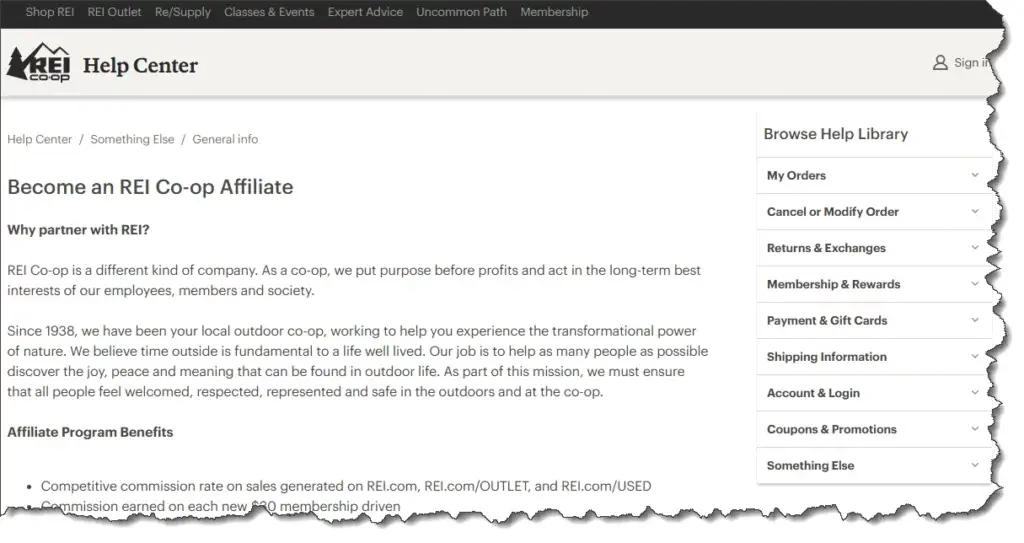
Hit “Apply Here” via the button in the Key Program Details table, it’ll take you to REI’s Co-op partner page and then onto Impact’s sign up portal.
That’s REI’s only platform, so you can’t use ShareASale or Commission Junction.
Fill out the usual stuff such as business details, tax info, contact details, etc.
If you’re new to affiliate marketing, just register as a sole proprietor using your real name.
Pick how you want to get paid during signup. Direct deposit usually has lower minimums than checks, which is something to bear in mind.
2: Build Your Application Profile
Upload your site or social profiles showing you know outdoor stuff.
REI wants proof you’re not just some random blogger looking for a quick score.
Trust me, they can smell desperation from a mile away, like bears with honey.
Tell them all about your audience, such as who they are and what they’re shopping for.
Be specific: say “weekend hikers planning equipment upgrades” instead of “lifestyle readers.”
Explain how you’ll promote the brand (i.e., product reviews or camping guides).
Whatever fits your content style, just show how recommending outdoor essentials matches with what you already publish.
3: Submit Supporting Content Examples
Share 3–5 URLs of your best outdoor content: gear reviews, camping guides, hiking tutorials and so on.
Show that people are commenting, engaging, and sharing your posts.
Mention any outdoor credentials you have: wilderness certifications, camping experience, product testing background, or industry connections.
REI likes seeing real outdoor expertise, even though it isn’t mandatory.
If you publish season-based content like summer camping guides, winter sports posts or holiday gift lists, highlight those too because REI loves seasonal promotions.
4: Get Approved and Set Up Your Account
They’ll review your application in a few days, but strong niche content can get faster approvals.
Lifestyle blogs might wait longer or need more targeted examples to get approved.
Check your email for the thumbs-up from Impact. They’ll send login details and next steps.
Once you’re in, grab your promotional materials: product links, banners, and REI’s calendar showing when outdoor seasons peak and new gear arrives.
Who Should Promote REI Products?
If your idea of roughing it is a hotel without room service, then maybe skip this one.
But if you’re already blogging about camping trips or weekend hikes, then the REI partnership fits right in, since your readers are up at 2 AM wondering whether they really need that $300 backpack.
YouTube equipment reviewers also tend to perform well, as people want to know if that “waterproof” tent keeps them dry or just sounds good on paper.
Travel bloggers can slip gear suggestions into destination content naturally. “Here’s what I packed for Yellowstone” is way better than some forced product suggestion.
Parents writing about family camping trips also do well, especially with REI’s kids’ gear because nobody wants their 8-year-old freezing in a cheap sleeping bag, right?
(Psst, if you run a hiking blog and love testing shoes that feel like clouds, REI now stocks Hoka. And Hoka’s program pays up to 14% for reviewing max-cushion trail shoes that go the distance).
How Affiliates Can Drive Traffic to REI
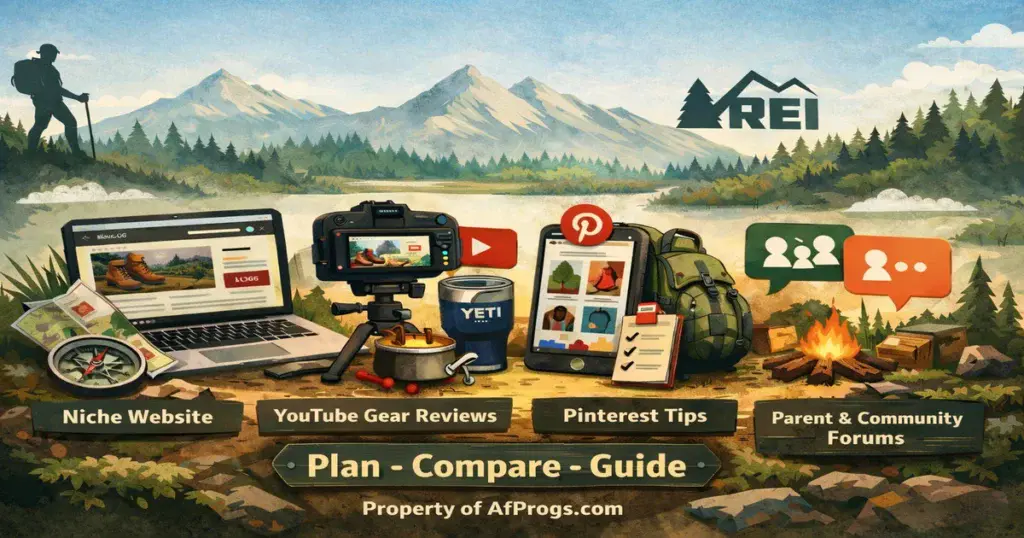
REI shoppers don’t buy on impulse. They research, compare, plan trips, and often build full kits over time.
That makes promotion less about flashy tactics and more about being helpful at the right moment, whether someone’s preparing for their first ever hike, a family camping weekend, or replacing worn-out kit.
So the four beginner-friendly methods below focus on realistic ways you can plug into that buying mindset, using content and platforms that match how REI customers already shop and make decisions.
Begin With a Niche Site (WordPress Blog)
A niche website is still one of the best ways for a novice to earn online with REI because it lets you connect with folks mid-research, right before they tap ‘buy’ on their screen.
Outdoor buyers compare, read, and double-check before ordering something. That’s where a blog shines through.
Instead of trying to cover “outdoor gear” broadly, narrow it down to use-case niches where REI already sells well.
For example, a site focused on weekend hiking and casual backpacking pairs nicely with products like the REI Co-op Trailmade Pants, Sahara Shade Hoodie, Darn Tough Hiker Micro Crew Socks, and Sawyer Picaridin Insect Repellent.
Good niche angles here include:
- Beginner hiking essentials
- What to wear on day hikes
- Comfortable hiking clothes for summer
- Bug protection that actually works
Your content should always answer simple, buyer-driven questions.
So topics like “Are REI Trailmade Pants good for hot weather hikes?” or “Do Darn Tough socks really stop blisters?” attract readers in the ready-to-buy phase.
Gradually, even a small site with 20–30 targeted posts can make you steady commissions without chasing after trends or publishing content nonstop, leading to burnout.
YouTube Gear Reviews That Drive Sales
YouTube works especially well for REI because people need to see gear in real use, not just read specs. This is ideal for beginners who can film simple, honest content without fancy editing skills.
This strategy pairs best with hands-on gear like the YETI Rambler 20 oz Tumbler, REI Co-op Camp Chairs, Mountain House Biscuits and Gravy, and Backpacker’s Pantry meals.
These are items buyers often search on YouTube right before they head over to the checkout page.
Strong niche angles include:
- Car camping essentials
- Camping food reviews
- “Worth it or not?” gear tests
- Camp comfort upgrades
The good thing is you don’t even need to show your face because filming a meal cooking on a camp stove, pouring coffee into a YETI tumbler, or setting up a camp chair will suffice.
What’s important is answering real questions like “Does this keep food hot?” or “Is this meal filling after a long hike?”
Beginner-friendly video ideas:
- Taste tests of backpacking meals
- Camp setup walkthroughs
- Budget vs premium camping gear comparisons
YouTube is effective because viewers arrive with buying intent, videos rank in both YouTube
Pinterest for Lifestyle & Planning-Stage Buyers
Pinterest is the perfect fit for REI products that sell on visual appeal and planning, especially clothing and lightweight gear.
This method is actually more suitable for newbies who don’t want to be on camera or publish content continuously.
Products such as the REI Co-op Sahara Shade Hoodie (men’s and women’s), Sahara Amphib Shorts, Trailmade Rain Jacket, and kids’ hiking apparel perform well because they fit into outfit planning and seasonal boards.
Effective niche themes include:
- Hiking outfits for beginners
- National park packing lists
- Family camping clothing ideas
- What to wear hiking in summer
Instead of promoting products directly, you build pins around different situations.
As an example, a pin titled “What to Wear for a Summer Day Hike” can link to a post on your WordPress blog that naturally features REI garments.
Pinterest can work wonders for beginners, since it’s a search-driven platform, your pins can rank for months, and you can also reuse the same content across multiple boards to save you time.
Parent & Community Traffic
Forums, Reddit and social media groups can be one of the quickest ways for REI affiliates to see results, especially when you’re promoting kids’ and family gear.
Products like kids suede classic shoes, junior sleeping bags, camp chairs, and easy camp accessories sell well, as parents want reassurance before buying anything.
They’re not chasing the cheapest option, they want good quality items that won’t fail their children.
Solid niche ideas can include:
- First camping trip with kids
- Beginner gear for family camping
- Kids staying warm while camping
- Durable outdoor gear for families
You don’t spam links like it’s still the 1990s. You answer questions to the best of your knowledge and experience to get results.
For example, a parent asking “What sleeping bag should I get for my 7-year-old?” is an ideal opportunity to link to a relevant detailed guide on your site or even YouTube channel.
This traffic method works great because it builds trust quickly, there’s low competition, and parents convert into sales once they feel confident in the value you offer.
One helpful response can drive traffic for months without the need for creating new content every week.
Pros & Cons of the Program
Time for the good, the bad, and the REI:
The Brand’s Trust Drives Conversions
Folks know this brand doesn’t sell junk.
So when you recommend their equipment, you’re not fighting uphill battles trying to convince anyone that it’s legit.
Their unique membership model creates loyal buyers who stick around instead of buying once and disappearing.
With 25+ million members who shop here first, your recommendations reach customers who are ready to purchase, not just browsing.
Having physical stores helps too, as visitors can test gear in person, then come back and buy through your links when they’re ready.
Huge Gear Range to Promote
REI stocks everything outdoor-related in one place.
Your readers can build their entire camping setup without hopping between different sites hunting for tents, boots, and sleeping bags.
The Co-op house brand gives budget-conscious buyers solid alternatives without the steep price tags.
Most of the time, these hold up just as well as the expensive name-brand options without emptying your wallet (or purse).
Better still, REI keeps popular items stocked during peak season, unlike smaller retailers that run out of everything the minute summer hits.
Just 15 Days to Earn That Click
The 15-day tracking window isn’t as generous as other partnerships offering 30–45 days.
It’s like speed dating for earnings, you’ve got to make a good impression fast.
Big-ticket outdoor buys take time, as enthusiasts often research tents, backpacks, and kit for weeks before pulling the trigger.
That means you need quicker conversions, not a long sales cycle, which is something that doesn’t always match how the audience shops for this category.
Slow Payouts: The 47-Day Lag
Waiting 47 days for your money feels long, especially if you’re used to offers that pay more promptly.
REI tests your patience, and then some.
Monthly payments work fine once you’re established, but the drawn-out cycle between a sale and seeing the funds arrive can take the wind out of your sails early on.
I learned this during my old Black Friday campaigns. Months can pass before earnings show up, while your bills pile up. It’s seriously deflating.
5% Flat Rate – Solid, Not Flashy
The rate works for most publishers, but it’s not the highest in the outdoor space.
Some niche programs pay more, but they usually come with tiny audiences or questionable products.
There’s no tiered structure either, so you earn the same whether you’re promoting once a month or sending serious traffic.
No scaling bonuses, no rewards for going big.
Is REI’s Opportunity Worth it?
Think of that reliable hiking friend who always shows up prepared: never flashy, but consistently delivers. That’s REI’s affiliate partner program in a nutshell.
The 5% rate isn’t exactly flashy, but it works.
And waiting 47 days for payments is disappointing at first, but you get used to it.
The good news is their crowd follows through with orders instead of just filling carts with gear they’ll never buy. That reliability matters more than chasing higher rates that don’t convert.
After years of promoting everything from costumes to digital products, I’ve learned that completed purchases beat high traffic every time.
Skip the REI opportunity if you’re chasing quick or massive wins because this program rewards patience, not shortcuts.
But go for it if you want steady earnings from a brand that’s been around forever and isn’t going anywhere.
(Psst, if your audience is more into selling camp mugs than sipping from them, the Printify program lets you earn from creators printing their own outdoorsy designs).
FAQs About the REI Affiliate Program
How much does the REI affiliate program pay and when?
You earn 5% per sale. Payments land after 47 days (27 to lock, 20 to release), with thresholds based on your payout method.
What can affiliates typically earn?
Average orders are $120–$175. At 1,000 visitors and 1.5% conversions, that’s about $112.50 from 15 monthly sales.
Does REI have an affiliate calculator?
Yes. I built one in this review — use the tool in What You Earn on Each Sale to estimate commissions from your sales.
Where do you apply to join?
Applications go through Impact Network, REI’s only platform. Decent outdoor content helps—high traffic isn’t required.
Can affiliates promote the full catalog?
Yes. You can link to anything on REI.com, including Outlet and Used items. No category restrictions apply.
How does tracking and attribution work?
Impact manages tracking with 15-day cookies, last-click attribution, and near-real-time reporting. Third-party pixels aren’t supported.
What support and tools do partners get?
A dashboard, product links, banners, seasonal calendars, and email support. Free shipping over $50 boosts conversions.
Your REI-liable partner,
Neil.
