TL;DR
- Six things get people declined. Thin content, a bad fit, low traffic, a rushed application, a banned promotion method, and a site that looks half-built.
- On a network you clear two approvals, the network and then each brand on it. Go direct to a brand and there’s one.
- Udemy wants 500 monthly visitors before it’ll look at you. Plenty of programs publish a floor like that, and marketplaces like ClickBank have none at all.
- Your profile description does more work than your traffic numbers when you’re small. Almost nobody writes it properly.
- A no is nearly always a not yet. Fix the gap they named, give it three months of real work, then apply again.
You found the program, read the commission rate, and filled in the form. Then nothing happened. Most advice on how to get accepted into affiliate programs stops right about there.
Or worse, a one-line email saying your application wasn’t successful, with no clue which part of it failed. Sometimes it just sits there instead. “Pending” for three weeks, like the plumber who swore he’d call you back Friday.
None of it’s a mystery, though. Programs publish what they want, and the affiliate managers doing the reviewing have said out loud what they check. Here’s what they’re looking at, and what to change when the answer comes back no.
What Does It Take to Get Accepted Into Affiliate Programs?
Proof you’re a real publisher whose readers would actually buy the things you recommend. Every program words it differently, but that’s the whole test underneath.
A brand only makes money when your reader clicks your link and buys something. That’s how affiliate programs work, and it’s why they’re fussy about who they hand a link to.
Nobody’s grading your website. They’re working out one thing. Does handing you a tracking link end in sales, or in refunds and a mess someone has to explain to their boss?
Read any requirements page against that question and the rules stop looking random. A traffic minimum is really a bet that volume turns into sales. Thin pages get ruled out because they breed refunds, and they care about your disclosure because when you skip it, part of the trouble lands on them.
Most beginners read a decline as a verdict on their ability. It isn’t. It’s a match that doesn’t work yet.
Worth noting: you don’t need every program to say yes. Some will take you today, some in six months, and knowing which is which saves you a pile of wasted applications.
How Does the Affiliate Program Approval Process Work?
It depends where the program lives. Apply through a network and you clear two approvals, the network first and then each brand on it separately. Go direct to a brand running its own program and there’s one.
Getting into Awin or CJ isn’t the finish line, it’s the lobby. Somebody still has to buzz you up.
Networks check you’re a real publisher first. Rakuten’s own publisher requirements ask for unique content that adds value for visitors, plus agreement to their policies on disclosure, before you’re anywhere near an advertiser. Translation: they’re screening out spam sites, not judging your niche.
Each brand then decides for itself. Networks call them advertisers, and every one of them is asking a different question: do you fit what we sell? That’s how you get accepted by a network on Monday and turned down by three of its advertisers on Wednesday, same site, same traffic. Nothing has gone wrong when that happens.
What “pending” actually means
Nobody’s looked at it yet, or an automatic rule hasn’t kicked in. Some brands wave through everyone the network sends them. Others turn down anyone who left a box empty. Plenty just leave you sitting there until someone works through the queue on a wet Thursday.
Silence for a week tells you nothing about your site. Chasing after two weeks is fair, and chasing after two days makes you the person emailing about a parcel that shipped yesterday.
What’s different about applying direct
The brand wrote its own rules, and nobody made them match anyone else’s. So the requirements page is the only place those rules exist. Read it properly instead of assuming what worked on a network carries over.
Some direct programs are looser than anything on a network. Others want a traffic report and a phone call before they’ll even talk.
What Are the Requirements for Affiliate Program Approval?
Five things, in most cases. A live site that looks cared for, content that adds something the merchant’s own pages don’t, and a disclosure people can see. Then promotion methods inside their rules, and account details that check out.
Sort these once and every application after it gets easier. You’re fixing the site, not the paperwork.
Does your site look like a real site?
Live domain, about page, contact page, working menu, and enough posts that the place doesn’t echo. An empty site reads like a shop with the shutters half up and one tin of beans on the shelf. Nobody’s stopping, including the affiliate manager.
Some faults get a site declined before anyone reads a word of it. A parked domain, meaning you bought the name but there’s only a holding page on it. A free subdomain, so your address reads yoursite.wordpress.com instead of your own name. The demo text your theme came with, still sitting in the sidebar next to menu links pointing at pages you never built.
An affiliate manager spots every one of those in seconds, and none of them take long to fix.
Your about page carries more weight than you’d expect. It’s where someone decides there’s a real person behind this.
Is your content adding anything the merchant’s page doesn’t?
Only if you’ve done something with the product the merchant can’t do on their own page. Tested it, compared it against the alternatives, priced it up, or said plainly who shouldn’t buy it.
Google calls the opposite thin affiliation, which is the maker’s own description copied across with your link stuck on the end. Its spam policies name the better version too: real reviews, real testing, price detail, and pages that help somebody choose. Affiliate managers check for the same thing, they just don’t call it that.
Ten posts worth reading beat 40 that just describe the product. The person reviewing your application won’t read the whole site. They’ll open two or three posts, so the ones closest to what the merchant sells need to be your best work.
Publish before you apply, not after. An empty category you’re planning to fill once you’re approved reads as nothing.
Is there an affiliate disclosure?
Your site must have a disclosure page. But the page alone isn’t enough. The FTC wants disclosures clear and conspicuous, which in plain words means somewhere a reader can’t miss them, like next to a link. It also says the words “affiliate link” aren’t enough on their own, because plenty of readers don’t know what they mean.
Missing disclosures take seconds to spot. So does a missing privacy policy. Neither one is hard to fix, which is what makes them such an annoying way to lose an application.
Do your promotion methods match their rules?
Every program bans something, and applications that ignore it get declined without a word of explanation. The usual suspects: bidding on the brand’s name in paid search, coupon and voucher sites, cashback deals, email to bought lists, and promoting in certain countries.
Read the terms, then describe what you’ll genuinely do. Running paid ads on a program that bans brand bidding? Say you run paid ads, and say you’ll stay off branded terms.
Guessing at what they want to hear works right up until the tracking shows something else.
Why is Awin asking me for a $5 deposit?
Because it’s verifying your bank details, not charging you for access. Awin’s own guide explains the signup deposit comes back to you with your first commission payment, once you’ve earned enough to get paid.
Have your tax details ready while you’re in there. Networks want a tax form and your payment details before money moves. A half-finished account holds up applications as well as payouts.
Any “program” wanting money before you’re allowed to promote anything is a different animal entirely. Some charges are fine and some mean you’re being asked to pay to join a program that was never really an affiliate program. Learn the difference before you hand over a card.
Some Programs Want You Established Before They’ll Say Yes
Some brands publish a number, and coming in under it means nothing else on your application matters. It’s the old bank trick. They’ll lend you the money once you can prove you don’t need it.
Udemy asks for at least 500 monthly visitors across the last three months, or 500 followers. It also says outright that it won’t take affiliates who are just getting started.
I’ve been on the wrong side of that gate myself, told in plain terms that my monthly visitor numbers weren’t high enough to be considered. Nothing unfair about it, mind you. Programs with a floor want affiliates who are already up and running, which rules out beginners, me included at the time.
Not every program spells the number out. Shopify words the same gate differently, asking for an active website, an established audience, and original content of its applicants. Number or no number, it’s the same door.
Two minutes on a requirements page saves an application you were never going to win. Read it before you apply, not after.
What to do when you’re under the floor
Apply in tiers instead of applying everywhere. Start with programs that publish no minimum at all. That covers most smaller in-house programs and a good chunk of brands on the networks. Get accepted, publish content that uses those links properly, and let the traffic build.
Building past a floor takes longer than it sounds. On my old site, ZeroToAffiliateHero.com, it took around nine months and 218 posts to get anywhere. One month showed 942 clicks and 65K impressions in Google Search Console, meaning the times a page turned up in Google. That was my own pace on that site, not a timeline to hold yourself to.
Go back to the ones with a floor once you can clear it. A program that turned you down in March might have no memory of it in July.
Beginners burn weeks to months applying upward and getting nowhere. Spend the time on programs that would have said yes, and you come out with content, data, and a track record. Picking the right affiliate program for the size you are now is most of the job.
How Do You Get Approved for Affiliate Programs?
By filling in the parts of the application everyone else leaves half done.
Your publisher profile is the part that decides it. Treat the box as a pitch: who you are, where your traffic comes from, and why this brand rather than their competitor. Most affiliates type the shortest thing that clears the counter and go make a coffee.
Here’s the difference. The version that gets skipped:
“I have a blog about home coffee equipment and I will promote your products to my audience through my website and social media.”
The version that gets read:
“I run a home coffee site covering espresso setups under $500, published since early 2024, with around 40 how-to and comparison posts. Traffic is roughly 85% from Google, mostly US readers picking their first machine. Your grinders fit a comparison post that pulls my highest traffic, plus a buying guide going live next month. I disclose affiliate links at the top of every post and I don’t bid on brand terms in paid search.”
Both clear CJ’s minimum of 250 characters, which its own guidance says was never the point. One tells an affiliate manager nothing. The other hands them a number, an audience, the exact pages their brand lands on, and two risks closed off before anyone raises them.
Your numbers don’t have to be impressive, only specific. “Around 400 visitors a month, 90% from Google, mostly US” beats any claim about a growing audience, and it’s checkable. Then get the rest of it right:
- All sites you own: not just the one you’re applying with, because promoting from a site the network has never seen lands you in trouble later.
- Every promotion method you use: blog, email and Pinterest all go in, not only the busiest one.
- An email address on your own domain: a free address next to a professional-looking site raises a question nobody needs.
- Only brands you’ll really promote: brands see hundreds of these a week, and someone who applies to everything looks just like someone who’ll promote nothing.
Write it once, properly, and it works on every application you send afterwards. Most people give it a few minutes.
What Is an Instant Approval Affiliate Program?
One that lets you start promoting without anyone reviewing you first. Pick an offer, generate a link, and you’re promoting the same day.
ClickBank is the obvious example. The account’s free, and no approval is needed to promote most offers in the marketplace, so you’ll have a working link inside ten minutes.
What you won’t have is anyone sending you traffic. The door’s open, that’s all.
There’s a catch, though. Open marketplaces carry great offers and dreadful ones side by side. Nobody’s checking offers for you, so that becomes your job instead: refund rates, sales page quality, and whatever the seller is promising.
Conditional approval is a different thing again
Some programs let you in straight away, then judge you on results. Amazon works like that. You’re in almost straight away, but you get 180 days to refer three qualifying sales. Miss it and the account gets closed, not left sitting.
That’s a trial shift, not a job offer. So don’t join one on day one, because joining before you have traffic burns the clock while you’re still creating your first ten posts.
Instant approval is a good starting point while your site grows into the programs turning you down today. The shallow end, not where you stay. Marketplaces are also the quickest way to find affiliate programs that will take you as you are.
Can I Get Affiliate Approval Without Prior Experience?
Yes. Being a good fit beats having a track record, because the brand cares more about who reads you than what you earned somewhere else. In my experience, that’s exactly how the first one goes.
When I applied to costume merchants through Commission Junction, I had no history and no earnings to point at. Nothing to show but content that matched what they sold. Back in mid-September 2011 I’d built one Squidoo lens around a single keyword people type when they’re ready to buy, “cheap plus size halloween costumes”.
On October 3, 2011, it sat at position 1 on page 1 of Google for that keyword. One page, on a platform that shut down years ago, in a market with a four-week season.
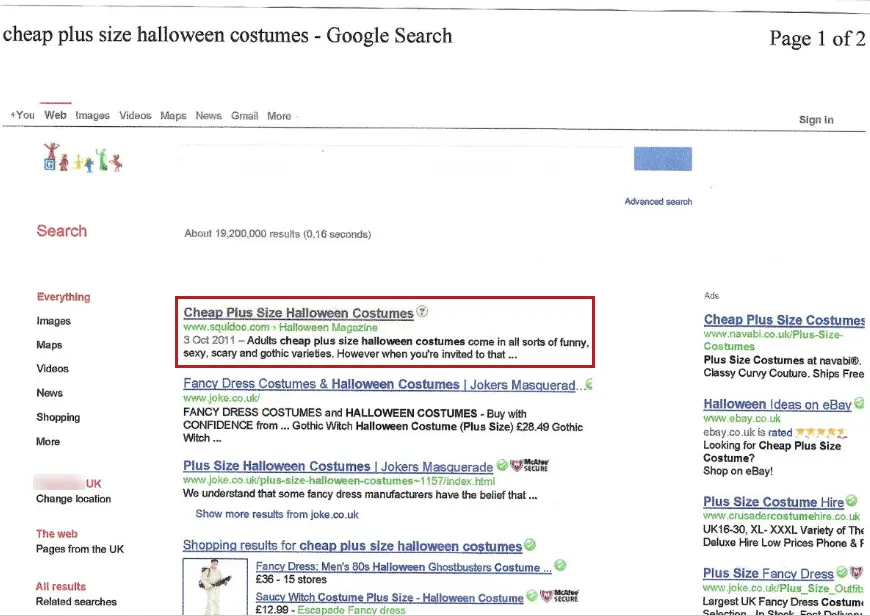
By October 24 that page had earned £70.18 in commissions. That’s my own return from one seasonal lens 15 years back, not something a beginner should plan around from a first campaign now.
One page, one matching offer, one audience that was ready to buy. That was the whole case for approving me.
It’s also why I’d rather see a beginner get into one program and learn it properly than collect approvals. There’s a real argument about how many programs make sense early on. The number is smaller than most people want it to be.
So when you’ve got no history, point at fit instead. Show the pages the product belongs on, name the search terms those pages target, and describe the reader landing on them. That’s easier to approve than an old hand applying with a site about a different topic.
Why Is My Affiliate Program Application Rejected?
Almost always one of six things, and the decline email rarely says which one.
CJ’s own advertiser managers said as much in a publisher Q&A. A publisher who kept getting turned down was told that getting denied is common for newer sites, and to use the messages tab to ask the brand why. Asking is the bit almost nobody does. You’re allowed to.
Two of the rows below are experiences. I’ve been declined for not having enough posts on a blog, and again for not having enough monthly visitors. Between them, those two cover most of what happens to beginners. Here’s the full list, and what changes the answer:
| What they saw | What to change |
|---|---|
| Not enough published content | Get at least 15 to 30 useful posts live on your site or channel |
| Content that doesn’t match their products | Apply to brands your existing posts already cover, not brands you wish you covered |
| Traffic below their stated minimum | Work on organic traffic first, then reapply once you clear the published number |
| An application that said nothing | Rewrite the profile description with real numbers, named pages, and named traffic sources |
| A promotion method they prohibit | Reread the program terms and describe methods they allow |
| A site that looks unfinished or unsafe | Fix the missing pages, disclosure, privacy policy, and broken links before reapplying |
One blogger documented the same loop, declined by Impact, asking why, being told her traffic was too low, then getting approved on a later application once it wasn’t. Reason given, reason fixed, applied again. That’s most rejection stories with the drama taken out.
25+ years of affiliate marketing and I still get the odd no. It stings for five minutes, then it joins the list of things to fix.
How to Get Accepted Into Affiliate Programs After a Rejection
Fix the gap they named, leave it long enough that something’s genuinely changed, then apply again. Neither of those declines was the end of it, and neither was personal.
What I did was write more posts, better targeted, and steady work on organic Google traffic until the site looked like something a brand would want its links on. Roughly three months later I applied to the same programs again and got accepted.
Same me, same niche. The site was the thing that had changed. Amazon puts the same idea in writing, telling rejected applicants they’re welcome to reapply once they’ve established their site.
Applying again the next morning with the same three posts is like re-sitting your driving test that afternoon. Same car, same habit of rolling straight through the stop sign.
How long to wait
Long enough that the thing they turned you down for has clearly changed. Three months is a sensible floor for a content or traffic problem, and two weeks is plenty for a missing disclosure or privacy policy.
Early affiliate months are slow for nearly everybody, and the published timelines on how long affiliate income takes to build back that up. Use the wait instead of counting it down. Publish, get the new pages into Google, and the second application writes itself, because now you’ve got fresh numbers to put in it.
What the wait actually buys you
Search traffic that stacks up while you’re not watching it. Another old site of mine, AffiliateIvy.com, showed 13.2K clicks and 524K impressions in Google Search Console after roughly 18 months.
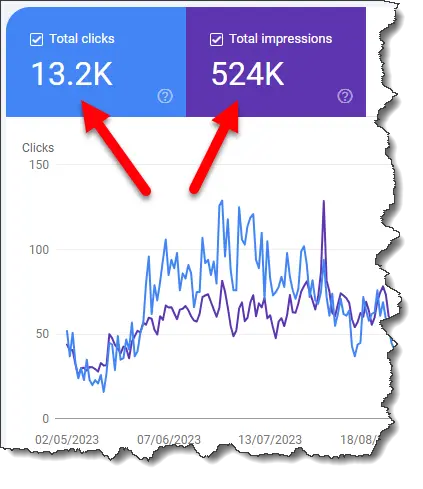
None of that arrived in a month. It arrived one blog post at a time, with most pages doing very little on their own.
Reapplying without annoying anyone
Send a short note with the second application where the program or network lets you. Name what changed, give the number, and mention the reason they gave you the first time.
Something like: “I applied in March and was declined because my traffic was too low. The site’s now at 900 monthly organic visitors, and I published a comparison guide in your category in May.”
To the person reading it, that’s a new application, not a repeat of the old one. Which is the whole trick.
My Final Thoughts
Getting accepted comes down to looking like someone a brand can hand a tracking link to without rethinking their decision. Real site, relevant content, an honest application with numbers in it, and a fit that makes sense to whoever reads it.
The programs saying no today are mostly saying not yet. Fix what they turned you down for, and approvals stop feeling like you got lucky.
Your ‘still-getting-the-odd-no’ partner, Neil